

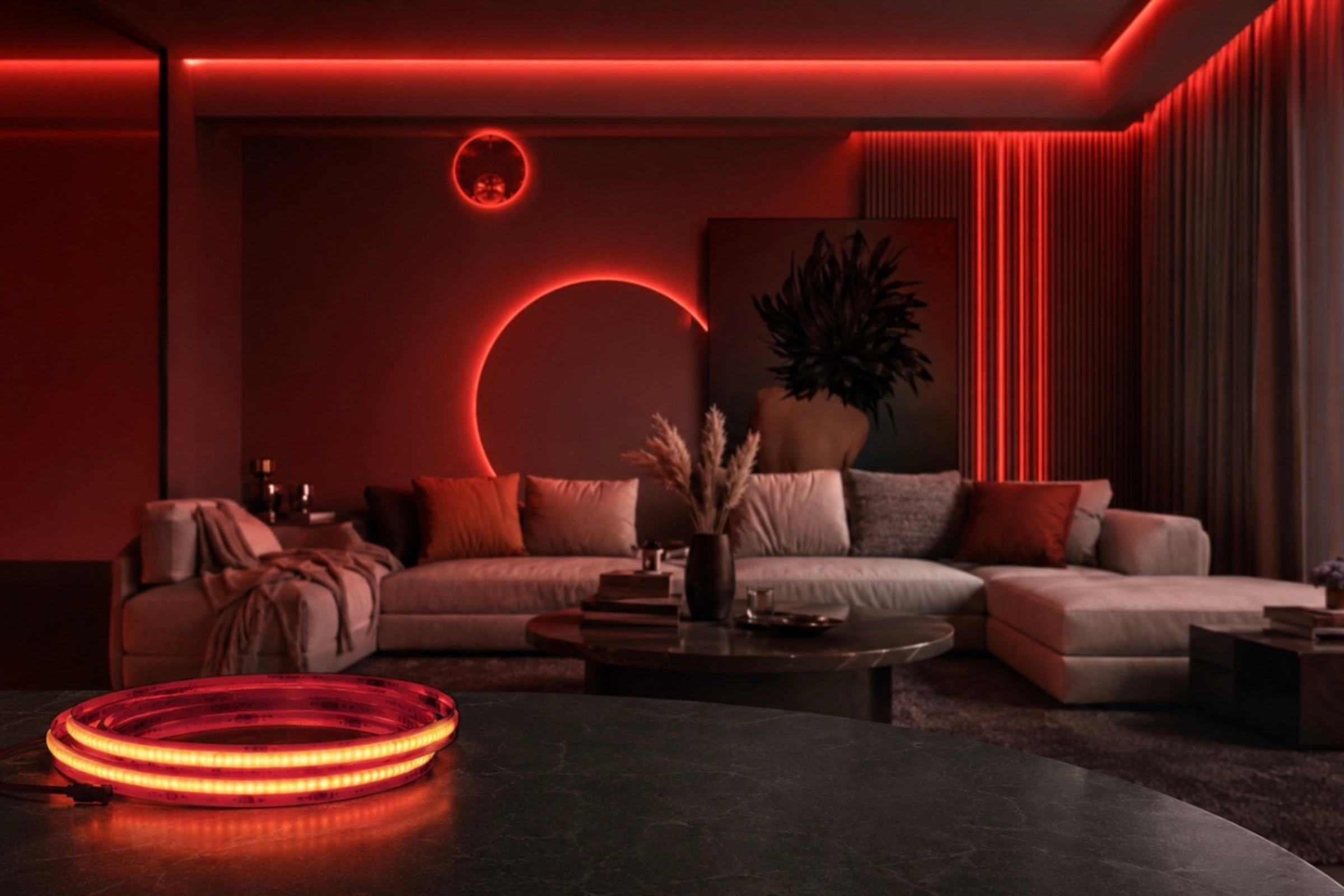
Choosing an LED strip for a kitchen, outdoor patio or wet environment starts with understanding its IP rating. IP20, IP67 and IP68 indicate different levels of protection against solids and water, but the right choice also depends on how the strip is installed, connected and powered. This guide helps Australian homeowners, electricians and lighting designers compare the options.
What does an IP rating mean?
IP stands for Ingress Protection. The first digit describes protection against solid objects and dust; the second describes protection against water. The rating applies to the tested product in the specified condition, not automatically to every cut end, connector, cable joint or driver in a completed installation.
IP20 vs IP67 vs IP68: quick comparison
| Rating | Protection | Typical consideration |
|---|---|---|
| IP20 | Protected against fingers and objects over 12.5 mm; no rated water protection | Dry indoor areas, inside suitable profiles or cabinetry |
| IP67 | Dust-tight and protected against temporary immersion under specified test conditions | Exposed or damp locations where the full assembly is suitably protected |
| IP68 | Dust-tight and protected for immersion under conditions specified by the manufacturer | Specialist wet or submerged applications only where explicitly approved |
When should you choose IP20 LED strip lights?
IP20 strips can be a practical choice for dry indoor spaces such as shelves, display cabinets, kitchens away from water exposure, and architectural coves. They are not rated for direct water contact. Check the fitting location, heat management and whether an aluminium LED profile is recommended.
When should you choose IP67 LED strip lights?
IP67 strips offer a higher level of ingress protection and can suit some outdoor and damp-area designs when installed according to the manufacturer’s requirements. Common projects include sheltered outdoor features, exterior architectural details and selected landscape-lighting applications. IP67 does not automatically mean a strip is suitable for permanent underwater operation, pool use or every exposed location.
Explore the LED strip light range at Empire of Light and confirm the exact IP rating, maximum run length and termination method on each product page before ordering.
When is IP68 appropriate?
IP68 describes protection against immersion under conditions specified by the manufacturer. It is not a universal promise that every IP68 product can be used at any depth or for any duration. For fountains, pools or submerged features, verify the manufacturer’s documented depth, duration, water-chemistry compatibility, electrical safety requirements and approved installation method. Do not use a product underwater unless the manufacturer explicitly approves that application.
Five installation checks that matter as much as the IP rating
1. Protect cut ends and joins
Cutting or joining a waterproof strip can compromise its original protection. Use manufacturer-approved sealing methods and compatible connectors. Check the completed assembly rather than assuming the uncut strip’s rating still applies.
2. Choose the correct LED driver
The driver needs the correct output voltage and sufficient capacity, and it must be installed in an environment suitable for its own protection rating. An IP67 strip does not make an indoor-rated power supply weatherproof. Read our guide to choosing a 24V LED driver and browse LED drivers and power supplies.
3. Plan for heat dissipation
Waterproof coatings and enclosed channels can affect thermal performance. Follow the strip and profile manufacturers’ installation guidance, especially for high-output COB strips and long runs.
4. Check run length and voltage drop
Long strips can experience voltage drop and uneven brightness. Follow the manufacturer’s permitted run lengths and feeding arrangements. Do not assume that a waterproof rating allows longer continuous runs.
5. Use a licensed electrician where required
Fixed wiring and electrical work in Australia must comply with applicable requirements. Wet-area and pool installations need particular care, including appropriate electrical protection and product suitability.
Which IP rating should you use for common projects?
- Dry indoor shelf or display: IP20 may be appropriate where no water exposure is expected.
- Kitchen feature lighting: Choose based on actual splash exposure and the installation details, not simply the room name.
- Outdoor patio feature: Consider a suitably rated strip and a fully protected system, including joints and driver.
- Pool or underwater feature: Use only a product expressly specified and approved for that environment; an IP rating alone is insufficient.
Frequently asked questions
Is IP67 waterproof?
IP67 indicates dust-tight construction and resistance to temporary immersion under defined test conditions. It does not guarantee suitability for permanent submersion or all outdoor installations.
Is IP68 always better than IP67?
Not necessarily. IP68 immersion conditions are manufacturer-defined, and the best strip depends on the project, light output, colour temperature, physical dimensions and installation requirements.
Can I use IP20 LED strips outdoors if they are under cover?
A covered location may still experience moisture, condensation or wind-driven rain. Use a product and complete installation rated for the actual conditions.
Can I cut an IP67 strip?
Only if the manufacturer permits cutting, and only with its approved method for restoring the required ingress protection at the cut end.
Shop LED strip lights and accessories in Australia
Empire of Light supplies CERIAN lighting products for residential and commercial projects. Browse LED strip lights and LED drivers, then check each product’s current specifications and installation instructions before selecting components.