

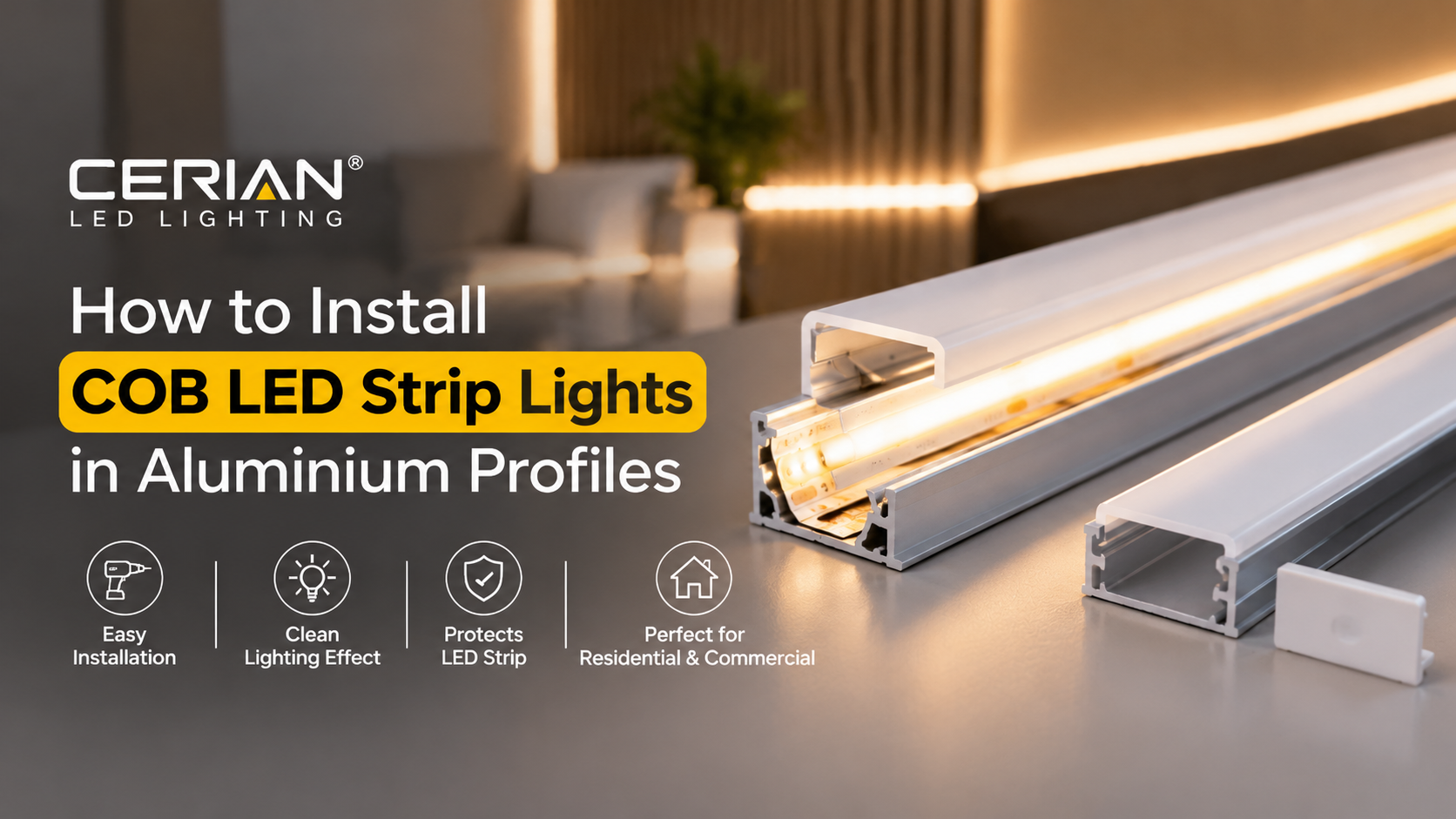
COB LED strip lights can produce a smooth, continuous-looking line of light for kitchens, joinery, shelves and architectural features. Pairing the strip with a suitable aluminium profile can improve the finished appearance, protect the strip from accidental contact and help manage heat when the components are correctly selected. This practical guide explains how to plan and install a COB strip in an LED aluminium channel.
Why use an aluminium profile with COB LED strips?
An LED aluminium profile, sometimes called an extrusion or channel, provides a defined mounting surface and a neat edge for linear lighting. Many profiles accept a diffuser cover and end caps. Depending on the specific products, the aluminium can also assist heat transfer. Always follow the strip and profile manufacturers’ thermal and mounting instructions.
1. Choose the right profile type
Common profile styles include surface-mounted, recessed, plaster-in and corner channels. Surface-mounted profiles suit many cabinets and shelves. Recessed profiles can create a flush finish where the substrate allows. Plaster-in profiles require careful coordination with the wall or ceiling finish. Corner profiles can direct light across a worktop or into a display.
Check the profile’s internal usable width, depth, diffuser clearance, fixing method and accessories. The strip must fit with enough clearance for any coating, connector and cable exit. External profile dimensions alone do not confirm strip compatibility.
2. Select a compatible COB LED strip
Before purchasing, check the LED strip’s voltage, power per metre, width, cut intervals, IP rating and permitted maximum run length. Match colour temperature and colour-rendering performance to the application. COB strips can look more continuous than some conventional LED tapes, but appearance still depends on the strip, diffuser and viewing distance.
Explore Empire of Light’s LED strip lighting range for available options.
3. Plan the driver and cable route
Calculate total strip load by multiplying watts per metre by installed length. Select a compatible constant-voltage driver with suitable capacity and operating margin, following the product datasheet. Check controller and dimming compatibility, cable sizing, voltage drop and accessibility for future servicing.
For a worked example, read How to Choose a 24V LED Driver for LED Strip Lights or browse LED drivers.
4. Measure and prepare the installation
- Measure the mounting location and confirm profile lengths, corners and end caps.
- Identify fixing points and ensure the mounting surface is suitable and level.
- Plan where the supply cable enters and where joints will be accessible.
- Cut the aluminium profile using suitable tools and deburr sharp edges, following the manufacturer’s instructions.
- Keep dust, swarf and debris away from the LED strip and electrical contacts.
5. Fix the aluminium channel securely
Use the manufacturer’s recommended clips, screws or other approved fixing method. Check the substrate and avoid fasteners that could contact or damage the LED strip. If the profile is recessed or plastered in, confirm the finished surface and diffuser access before closing the installation.
6. Install the COB strip inside the profile
Disconnect power before handling the strip. Clean and dry the profile’s mounting surface as instructed. Apply the strip evenly without stretching, twisting or exceeding its minimum bend radius. If the strip uses an adhesive backing, follow the adhesive and substrate preparation instructions; adhesive alone may not be an approved fixing method for every environment.
Cut only at manufacturer-marked positions. Use compatible connectors or manufacturer-approved soldered connections, with suitable insulation and strain relief. Our LED Strip Connectors vs Soldering guide explains the trade-offs.
7. Fit the diffuser and end caps
Test the strip before fitting the diffuser. Confirm consistent illumination, polarity, controller operation and absence of unusual heating. Install the diffuser without pinching wires or forcing components. Diffusers can soften the light and hide individual light sources, but their optical transmission and profile depth affect the final result.
8. Check temperature, brightness and maintenance access
Run the lighting under normal operating conditions and check that the installation stays within manufacturer temperature limits. Ensure drivers and controllers have appropriate ventilation and service access. For long runs, assess voltage drop and any visible brightness difference between the start and end of the strip.
Common installation mistakes
- Buying a profile without checking its usable internal width.
- Choosing a driver by wattage without verifying output voltage and dimming compatibility.
- Cutting a COB strip away from the designated cut marks.
- Sealing or enclosing components without following thermal guidance.
- Assuming a waterproof strip makes the complete channel and connections waterproof.
- Closing the diffuser before testing the full installation.
Indoor and outdoor installations
For kitchens, cabinetry and dry interiors, check whether an indoor-rated strip and profile are appropriate. Outdoor and wet-area installations need components, connections and power supplies rated for actual exposure. Cutting or joining an IP-rated strip can change its protection. See IP20 vs IP67 vs IP68 LED Strip Lights for a comparison.
Frequently asked questions
Do COB LED strips need aluminium profiles?
Not every product requires one, but profiles can provide a tidy finish and may assist heat management when specified by the manufacturer. Check the exact strip’s installation requirements.
Can I use any diffuser with a COB strip?
No. Match the diffuser to the profile and consider optical transmission, fit and manufacturer compatibility.
Can I bend COB strips around a corner inside a profile?
Only within the strip’s permitted bending direction and radius. For sharp corners, use a suitable joint or compatible corner connection rather than forcing the strip.
Can I install COB LED strips myself?
Planning and some low-voltage assembly tasks may be straightforward, but fixed electrical wiring in Australia must be performed by a licensed electrician where required. Follow local regulations and manufacturer instructions.
Explore CERIAN LED strip lighting solutions
Empire of Light offers LED strips, drivers and lighting accessories for residential and commercial projects in Australia. Browse the LED strip range and compatible driver categories, then confirm profile dimensions and component compatibility before ordering.