

Under-cabinet LED strip lighting can make kitchen worktops easier to use while giving cabinets a clean, modern finish. The best choice depends on where the strip is mounted, how much light you need, your preferred colour temperature and whether the installation needs dimming. This guide explains what to look for when choosing LED strip lights for kitchen cabinets in Australia.
Why choose LED strip lights for kitchen cabinets?
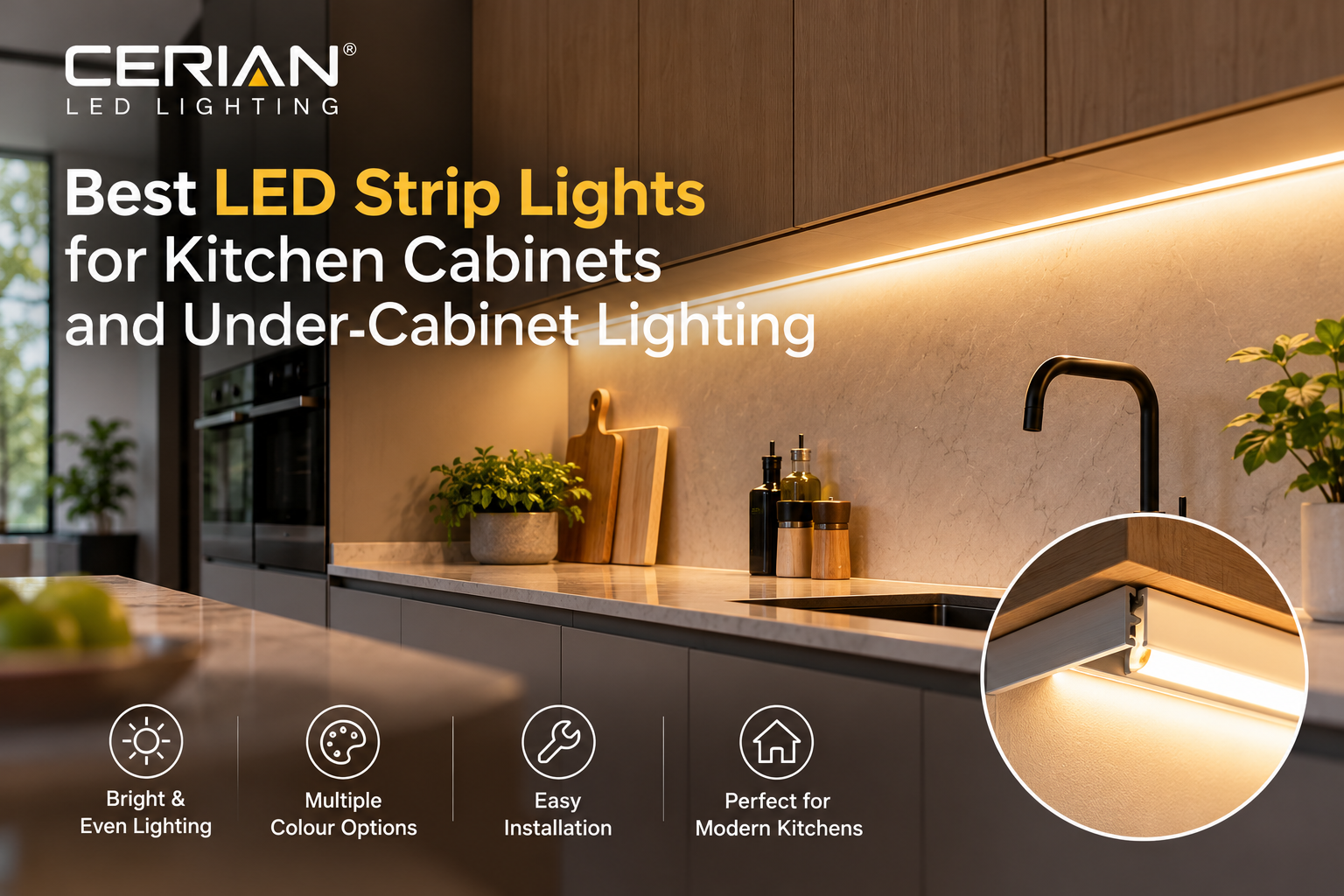
LED strips fit into narrow spaces beneath wall cabinets, inside pantry shelves and along kitchen joinery. When correctly positioned, they can light the work surface without relying entirely on overhead downlights. A suitable aluminium profile and diffuser can help achieve a neat finish and reduce direct views of the light source.
COB LED strip lights vs traditional LED strips
COB LED strips use a dense arrangement of light-emitting components and can create a smoother-looking line of light, especially in shallow installations. Traditional LED strips may show individual points of light when viewed directly or through a thin diffuser, although the result depends on LED spacing and profile design. Both types can work well for kitchen lighting when matched to the application.
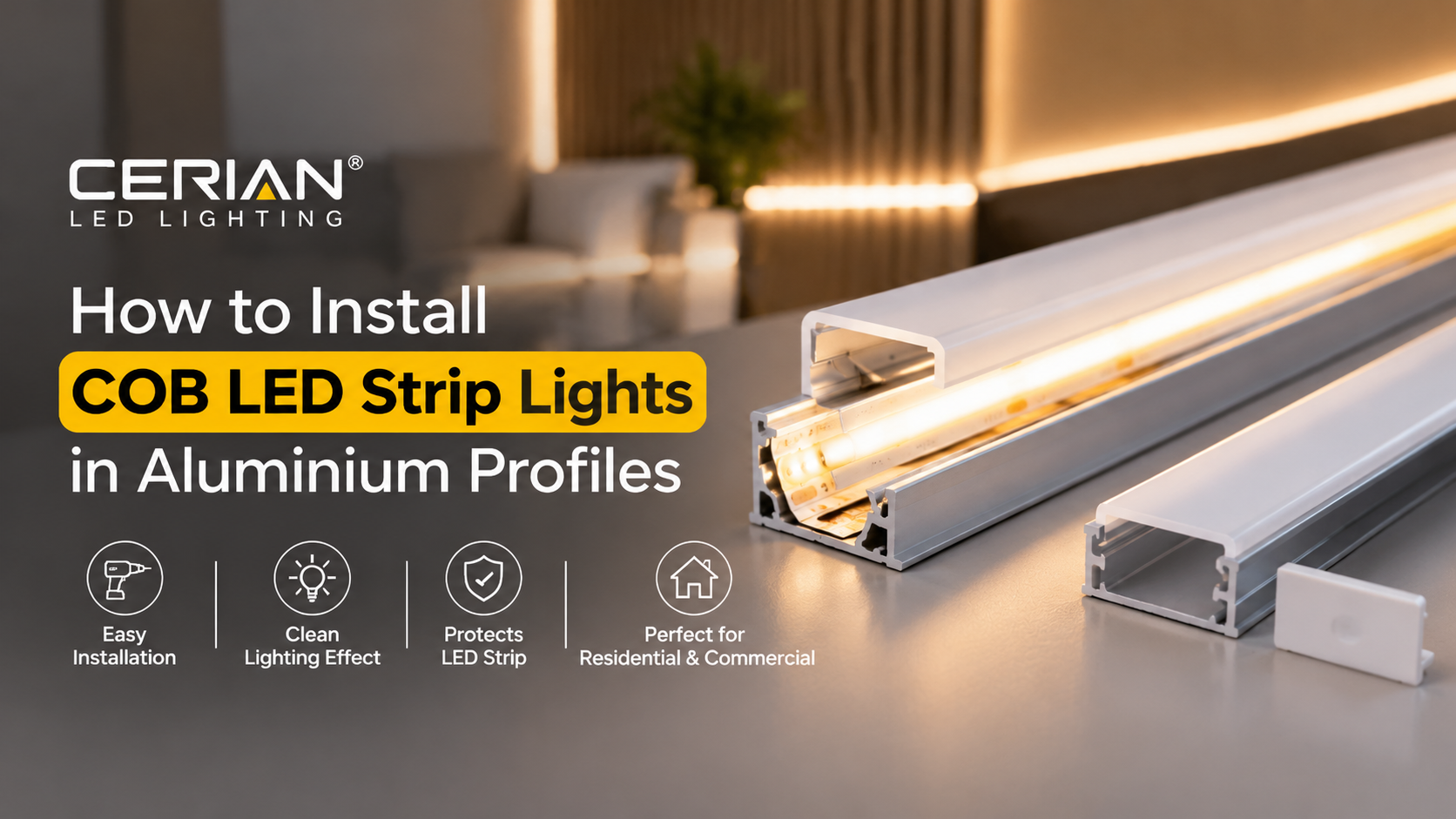
For a clean under-cabinet appearance, consider a compatible COB strip with an aluminium profile. Read our COB LED strip installation guide for profile and diffuser planning.
What colour temperature is best for kitchen under-cabinet lighting?
- 2700K–3000K warm white: creates a warm, inviting look that works well with timber and warm-toned finishes.
- 3500K–4000K neutral white: often suits task lighting on kitchen worktops where a balanced appearance is preferred.
- 5000K and above: provides a cooler appearance that may be suitable for some workspaces but can feel stark in residential kitchens.
Choose a colour temperature that complements your existing ceiling lights and cabinetry. If accurate food and material colours matter, also check the strip’s colour-rendering index (CRI) on the product datasheet.
How bright should kitchen LED strip lights be?
There is no single ideal wattage for every kitchen. Brightness depends on the strip’s actual lumen output, cabinet height, mounting position, diffuser and the amount of ambient light. Compare lumens per metre rather than using watts alone as a measure of brightness. For food preparation, prioritise useful illumination across the worktop and avoid glare reflected from glossy splashbacks.
Where should you position the strip?
For many kitchens, placing the strip towards the front underside of a wall cabinet helps distribute light across the worktop and reduce shadows cast by the person working. The exact position depends on cabinet depth, splashback finish and the selected profile. Test the light position before permanently fixing the channel.
Do kitchen LED strips need aluminium profiles?
An aluminium profile can give a professional finish, protect the strip from incidental contact and assist heat management where the manufacturer specifies it. Recessed and surface-mounted channels are common options. Check the usable internal width, diffuser clearance and mounting method before ordering. The profile and strip must be compatible.
Choosing a 24V LED driver for kitchen cabinets
Many LED strips use a 24V DC constant-voltage power supply, but always check the exact strip specifications. Calculate the connected load by multiplying the rated watts per metre by the total installed length, then choose a compatible driver with an appropriate operating margin in line with the manufacturer’s instructions.
For example, 3 metres of a strip rated at 10W/m has a nominal 30W load. This is an illustrative calculation, not a product recommendation. Read How to Choose a 24V LED Driver and explore CERIAN LED drivers.
Should under-cabinet LED strips be dimmable?
Dimming can make the same lighting useful for both food preparation and softer evening ambience. Check whether the strip, controller and driver support the intended dimming method. A standard non-dimmable driver should not be assumed compatible with a wall dimmer. Some systems use a compatible low-voltage controller between the driver and strip.
What IP rating is suitable for a kitchen?
IP20 LED strips may be appropriate for dry, protected locations. Areas exposed to splashes, moisture or frequent cleaning may need additional protection. Select components based on the actual exposure, including connectors and cable terminations. See our IP20 vs IP67 vs IP68 LED strip comparison for more guidance.
Kitchen cabinet lighting ideas
Under wall cabinets
Install a continuous strip beneath overhead cabinets to illuminate chopping boards, preparation areas and the splashback.
Inside pantry and display cabinets
Use appropriately positioned LED strips to illuminate shelves and help locate items. Consider glare, door clearance and suitable switching or sensors.
Kitchen island and toe-kick lighting
Concealed strips can create a subtle floating effect under a kitchen island or along the base of cabinetry. Check cleaning exposure, impact protection and how the light reflects from the floor.
Common mistakes to avoid
- Choosing wattage without checking actual lumen output.
- Installing a bright exposed strip where it creates uncomfortable glare.
- Using a driver with the wrong output voltage or inadequate capacity.
- Ignoring voltage drop on long runs.
- Using connectors that do not match the strip width or pad layout.
- Placing a dry-location strip where it may be exposed to water.
For joining sections around cabinets, read LED Strip Connectors vs Soldering. Fixed electrical work in Australia must be carried out by a licensed electrician where required.
Frequently asked questions
Are COB LED strips good for under-cabinet lighting?
Yes, compatible COB strips can provide a smooth-looking line of light. The final result depends on the strip, diffuser, profile and mounting position.
Is warm white or cool white better for a kitchen?
Warm white can create a welcoming atmosphere, while neutral white is often preferred for balanced task lighting. Match the choice to the kitchen finishes and existing lights.
Can LED strips be installed directly under wooden cabinets?
Follow the strip manufacturer’s approved mounting and thermal instructions. A suitable aluminium profile may be recommended; do not assume adhesive backing alone is sufficient for every installation.
Can one driver power several cabinet LED strips?
Potentially, if the combined load, wiring and voltage drop are within the driver’s specifications. Check connection layout and manufacturer requirements.
Shop LED strip lighting for kitchens in Australia
Explore LED strip lights at Empire of Light and browse LED drivers and power supplies for compatible lighting projects. Confirm each CERIAN product’s current specifications, dimensions and installation requirements before purchase.