

Good retail lighting helps customers see products clearly, supports a consistent store atmosphere and makes displays easier to navigate. LED strip lighting is a flexible option for shelving, shopfront features, display cabinets and architectural details. This guide explains how to choose suitable LED strips, profiles, drivers and controls for commercial projects in Australia.
Where LED strip lighting works in retail stores
Product shelves and display cabinets
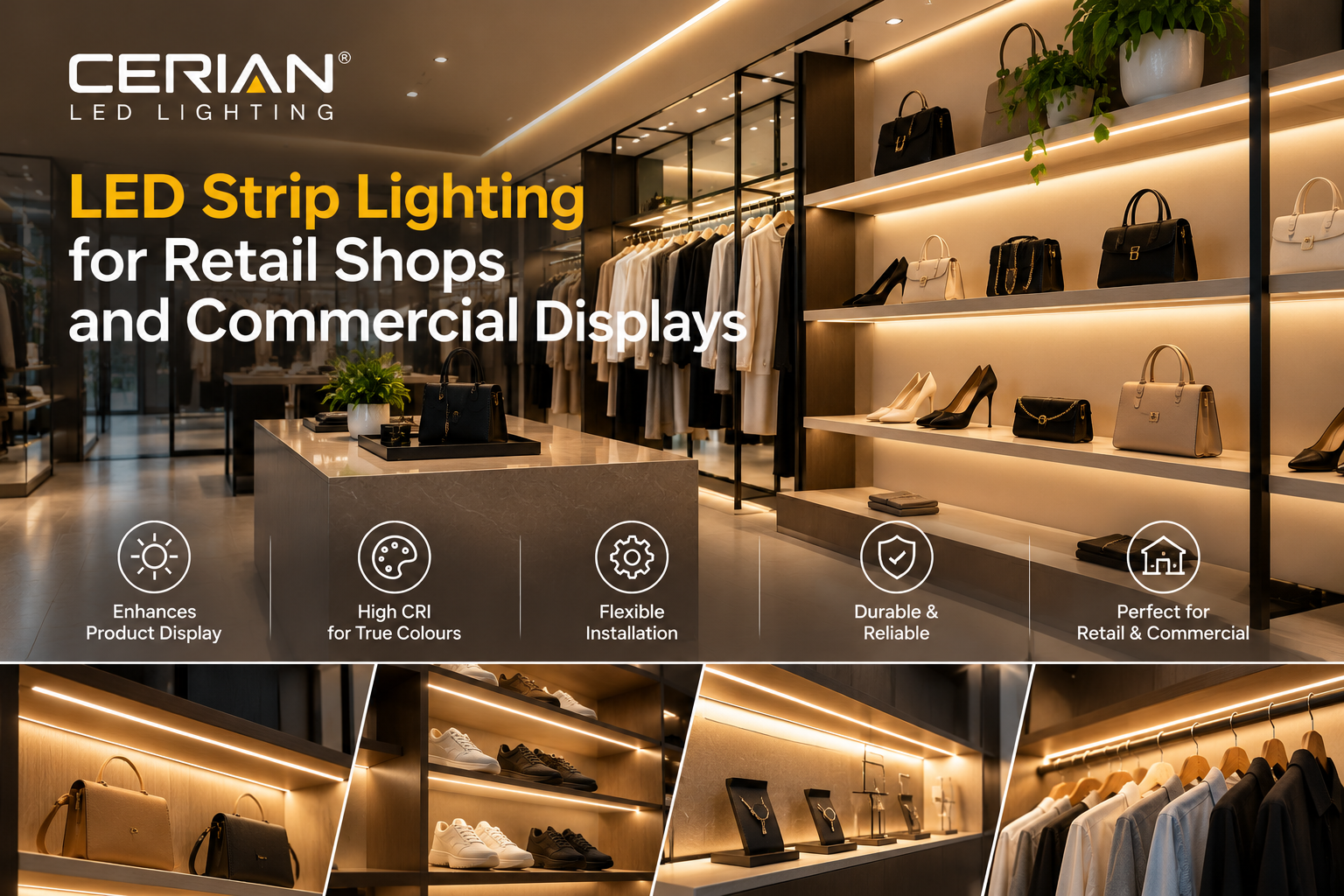
Concealed LED strips can illuminate merchandise on shelves and inside cabinets. Position them to minimise shadows and avoid direct glare into customers’ eyes. For reflective products such as glassware and jewellery, test the placement to control unwanted reflections.
Shopfronts and window displays
Linear lighting can define window frames, plinths and display edges. Consider daylight competition, viewing angles and operating hours. The right brightness depends on the display design rather than a fixed wattage target.
Countertops and point-of-sale areas
Under-counter or integrated joinery lighting can help create visual separation and support wayfinding. Keep electrical components accessible for maintenance and avoid placing exposed strips where they can be struck or cleaned with water.
Architectural features
LED profiles can highlight coves, wall details and feature ceilings. Coordinate the lighting layout with the shopfitter before cabinetry and plaster finishes are finalised.
COB LED strips or conventional LED strips?
COB LED strips can create a smoother-looking continuous line, making them attractive for visible architectural details and shallow profiles. Conventional LED strips may be suitable for concealed shelving or other applications where individual LED points are not visible. Compare actual lumen output, colour rendering, power, dimensions and manufacturer installation requirements instead of choosing by technology alone.
Choose the right colour temperature
Warm white lighting around 2700K–3000K can create an inviting atmosphere in some hospitality-inspired or premium retail interiors. Neutral white around 3500K–4000K can suit many general retail environments. Cooler white may be appropriate for selected applications. Consistency across nearby displays is often more important than choosing a single colour temperature for every store.
Colour rendering matters for clothing, cosmetics, furniture and food displays. Check the product’s documented CRI and, where relevant, more detailed colour-quality data before specification. A higher CRI can help colours appear more natural, but lighting design also depends on spectrum, illumination levels and surrounding finishes.
Plan brightness and glare control
Compare lumen output and lighting distribution, not just watts per metre. An overly bright exposed strip can cause uncomfortable glare and reduce the visual quality of the display. Recessed mounting, suitable diffusers and thoughtful positioning can improve comfort. For larger fit-outs, a lighting designer can help verify target illuminance and uniformity.
Use aluminium LED profiles for a professional finish
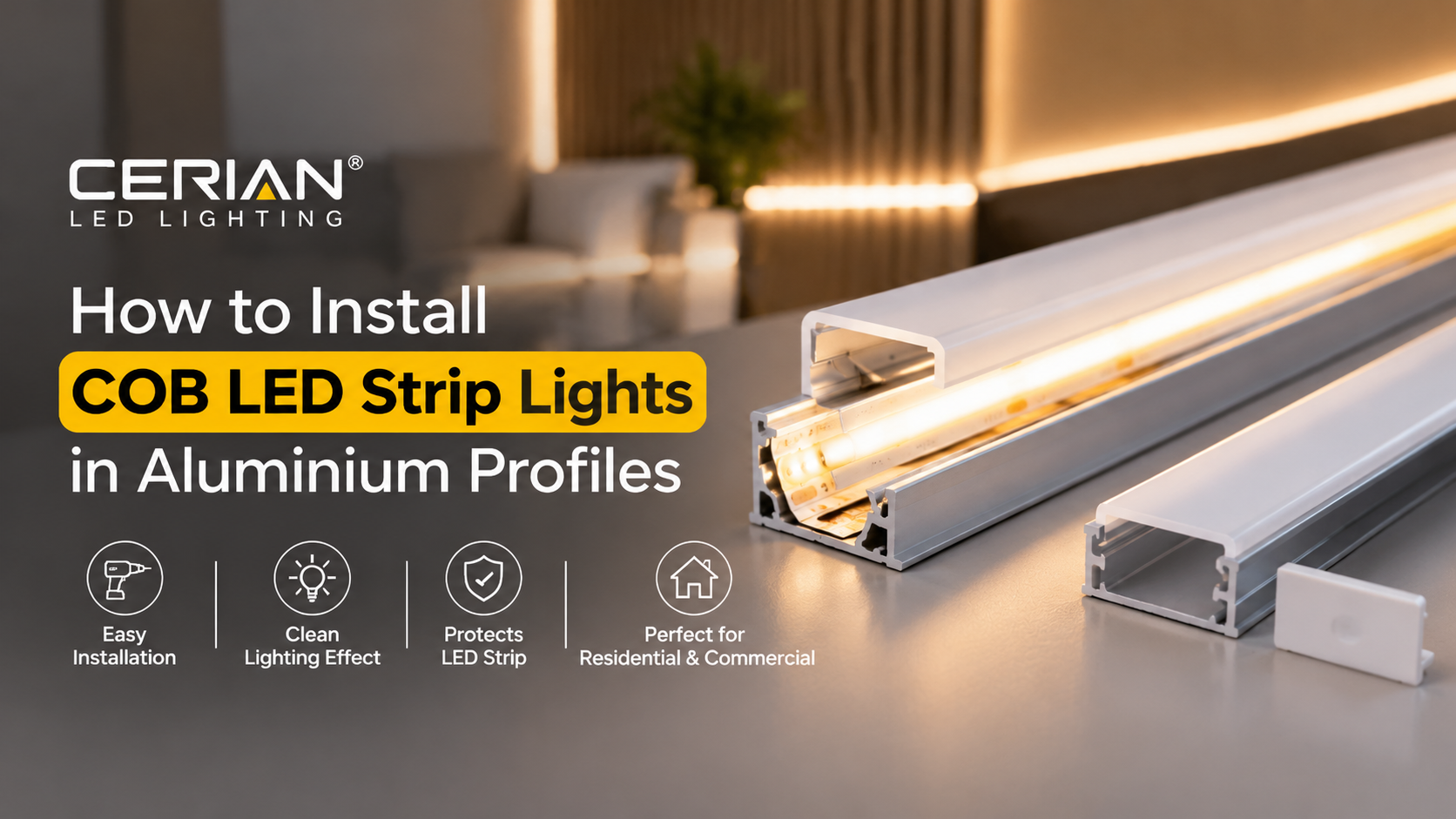
Aluminium profiles can conceal the strip, support mounting and provide a tidy architectural detail. Choose surface-mounted, recessed or corner profiles based on the joinery. Verify the profile’s usable internal dimensions and compatibility with the selected strip and diffuser. See our COB LED strip aluminium profile installation guide.
Calculate LED driver capacity correctly
Multiply strip power per metre by the installed length to calculate the nominal connected load. For example, a 6m installation using a strip rated at 12W/m has a nominal load of 72W. The example is illustrative; use the exact product datasheet. Select a driver with matching output voltage, sufficient capacity and an appropriate operating margin, following the manufacturer’s requirements.
Browse CERIAN LED drivers and read how to choose a 24V LED driver. Long runs may require multiple feeds or a different layout to manage voltage drop.
Consider dimming and lighting controls
Retail displays may need different lighting scenes for daytime, evening or special promotions. Dimming and controls can support this flexibility, but compatibility must be checked across the strip, driver and controller. Do not assume every LED driver supports mains dimming or every strip supports the same control protocol.
Indoor, outdoor and shopfront protection ratings
Dry indoor shelving may use appropriately specified IP20 products. Exposed shopfronts and damp areas need components rated for actual conditions, including drivers, connectors and terminations. IP67 is not a blanket approval for permanent underwater use. Read our IP20 vs IP67 vs IP68 LED strip guide before selecting protection ratings.
Installation and maintenance checklist
- Confirm strip width, voltage, wattage, lumen output and colour specifications.
- Choose a compatible profile, diffuser and connector system.
- Plan power supply locations and access for servicing.
- Check maximum run length, voltage drop and heat management.
- Test sample lighting against real merchandise and store finishes.
- Document the final driver and controller layout for future maintenance.
Fixed electrical work in Australia must be completed by a licensed electrician where required. Follow the relevant product installation instructions and applicable standards.
Frequently asked questions
Are COB LED strips suitable for retail display shelves?
They can be, particularly where a smooth line of light is desirable. Confirm brightness, colour quality, profile fit and thermal requirements for the specific display.
What colour temperature is best for a clothing store?
It depends on the brand atmosphere, merchandise and surrounding light. Many retailers compare warm and neutral white samples before final selection. Good colour rendering is especially important when customers assess fabric colours.
Can one driver power multiple display shelves?
Potentially, provided the combined load, wiring, voltage drop and driver specifications allow it. Consider maintenance access and how individual shelves will be controlled.
Should LED strips be installed with connectors or soldering?
Both can work where approved by the manufacturer. Read our LED strip connectors vs soldering comparison for compatibility and reliability considerations.
Explore commercial LED lighting at Empire of Light
Empire of Light supplies CERIAN lighting products for retail and commercial projects in Australia. Explore LED strip lights and LED drivers and power supplies. Review current product specifications and consult your installer before finalising a commercial fit-out.